How SSC and Dakhil GPA is calculated, with examples
Grade points, the 4th-subject bonus, two-paper subjects and what one failed subject does. The SSC and Dakhil GPA rules, worked step by step.

On result day, guardians often hold up a marksheet and ask two questions. "My child did not get A+ in every subject, so how is the GPA 5?" And: "One subject failed, everything else is good, so why is the GPA zero?" Both answers sit in the board's GPA rules.
This post walks through how SSC and Dakhil GPA is worked out, with examples you can check by hand. It is written for teachers, office staff and guardians alike.
Step one: marks to grade points
Secondary (SSC) and Dakhil both use a 5-point scale. Each subject's marks are turned into a percentage, and the percentage gives a grade and a grade point.
- 80 to 100: A+, grade point 5.00
- 70 to 79: A, grade point 4.00
- 60 to 69: A-, grade point 3.50
- 50 to 59: B, grade point 3.00
- 40 to 49: C, grade point 2.00
- 33 to 39: D, grade point 1.00
- 0 to 32: F, grade point 0.00
So a subject needs at least 33 percent to pass. Where a subject has creative (CQ), multiple-choice (MCQ) and practical parts, each part has its own pass mark. A good total does not help if one part is below its pass mark: the subject is still an F.
GPA is the average of the subject grade points
The GPA is the average grade point of the compulsory and group subjects. It takes three steps.
- Find each subject's grade point.
- Add up the grade points of every subject except the 4th subject.
- Add the 4th-subject bonus, then divide by the number of compulsory subjects.
The 4th subject is not counted in the number you divide by. This is the most common mistake.
How the 4th-subject bonus works

The 4th (optional) subject does not add its full grade point. Only the part above 2 is added.
- A+ (5.00) in the 4th subject adds 3.00
- A (4.00) adds 2.00
- A- (3.50) adds 1.50
- B (3.00) adds 1.00
- C (2.00) or lower adds nothing
One more point that matters: failing the 4th subject does not fail the student. They simply get no bonus.
Example 1: the 4th subject lifts the GPA
A science student has these grade points in nine compulsory and group subjects:
- Bangla: 5.00
- English: 4.00
- Mathematics: 5.00
- Religion and Moral Education: 5.00
- ICT: 4.00
- Bangladesh and Global Studies: 4.00
- Physics: 4.00
- Chemistry: 4.00
- Biology: 5.00
The total is 40.00. Without the 4th subject, the GPA is 40 ÷ 9 = 4.44 (to two decimal places).
In the 4th subject, Higher Mathematics, the student gets A-, which is 3.50. The bonus is 3.50 − 2 = 1.50. The GPA becomes (40 + 1.50) ÷ 9 = 41.50 ÷ 9 = 4.61.
Same student, and the 4th subject alone moved the GPA from 4.44 to 4.61. Many marksheets print both figures: "GPA without 4th subject" and the final GPA.
Example 2: GPA 5 without A+ in every subject
Now take a student with A+ (5.00) in seven subjects and A (4.00) in two. The total is 35 + 8 = 43. The 4th subject is an A+, so the bonus is 3.00.
GPA = (43 + 3) ÷ 9 = 46 ÷ 9 = 5.11.
A GPA never goes above 5.00, so this student's GPA is 5.00. That answers the guardian's first question.
Example 3: one failed subject
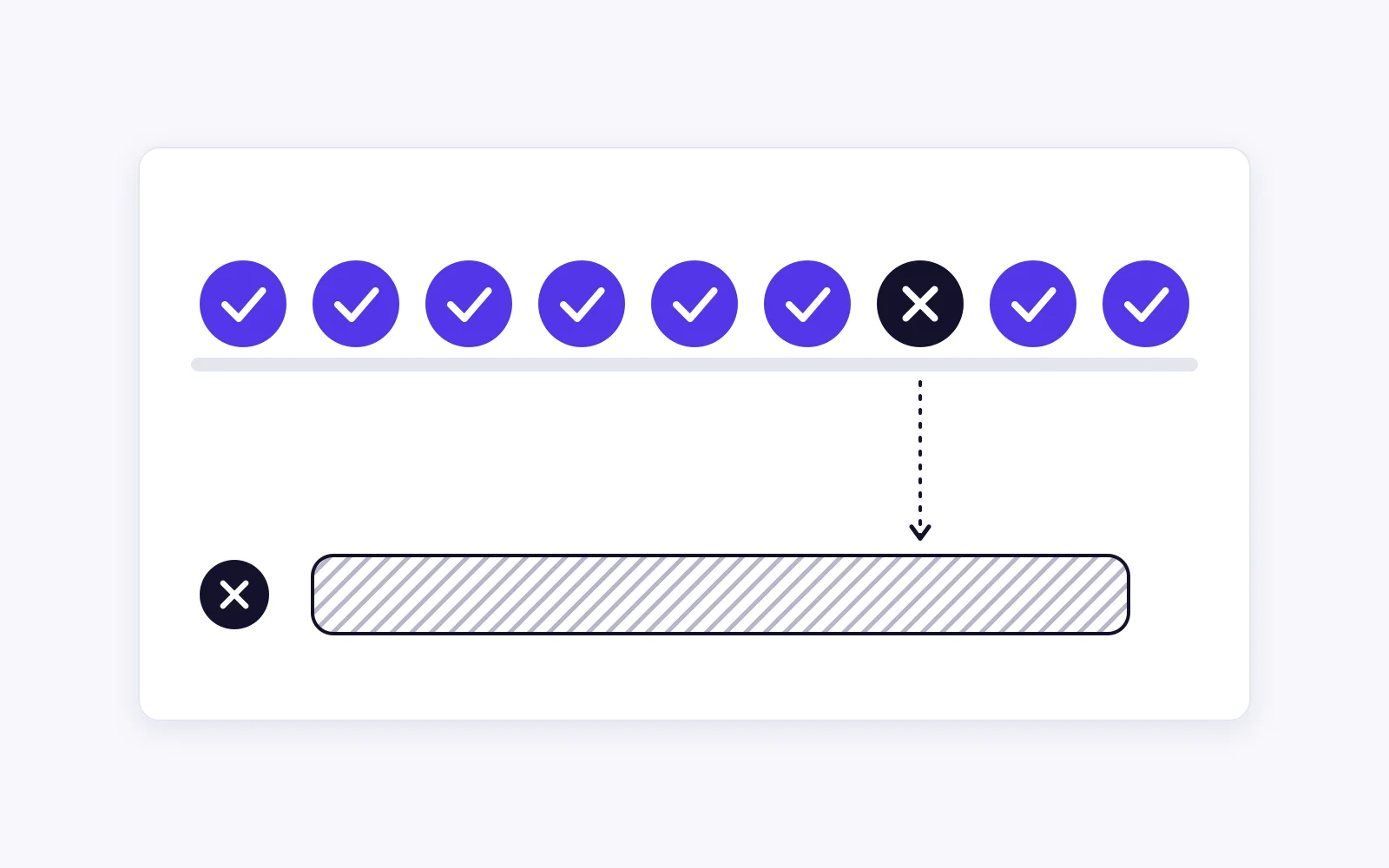
A student gets A+ in eight subjects but 30 marks in Mathematics, which is an F.
An F in any compulsory or group subject makes the whole result F, and the GPA is shown as 0.00. No average is taken, however good the other subjects are. That answers the second question.
If the same F had been in the 4th subject, the student would pass. Only the bonus would be zero.
Two-paper subjects
Bangla and English each have a first and a second paper, and the two papers count as one subject. Add the marks of both papers and grade the percentage of the combined full marks.
For example, Bangla 1st paper 85 and 2nd paper 71 make 156 out of 200. That is 78 percent, so Bangla gets an A, grade point 4.00. The papers do not enter the average as two separate subjects.
What is different for Dakhil
The Bangladesh Madrasah Education Board uses the same 5-point scale for Dakhil, the same 33 percent pass mark and the same 4th-subject bonus. The difference is mostly the subject list. Subjects such as Quran Majid and Tajweed, Hadith Sharif, Aqaid and Fiqh, and Arabic 1st and 2nd paper count as compulsory subjects in the average. Arabic's two papers combine into one subject, just like Bangla and English.
So the three examples above work the same way on a Dakhil marksheet.
Rather not add it up by hand? Type the marks into the free SSC GPA calculator or Dakhil GPA calculator. Both follow these same rules, 4th subject included, and work on a phone.
Mistakes that creep into hand calculations
- Counting the 4th subject in the number you divide by.
- Adding the 4th subject's full grade point instead of the part above 2.
- Writing a GPA above 5.
- Passing a subject on its total when one part (say MCQ) is below its own pass mark.
- Averaging the two papers of a subject as two subjects.
Using the board rules in your own exams
Many institutions grade their class 9 and 10 half-yearly, pre-test and test exams on the board rules. Students and guardians then see early how the board exam may go. Done by hand or in Excel for hundreds of students, the mistakes above slip in easily.
In EduSine you set the 4th subject, the two-paper subjects and the CQ, MCQ and practical pass marks once when you set up the exam. After marks are entered, GPA, grades and merit positions are worked out automatically, and the marksheet can show the GPA without the 4th subject as well. See Result publishing for more.
Boards change these rules from time to time. Before each year's exams, check your education board's latest notice.
A few details are all it takes to start your institution's website and software, free.
Create your website for freeRead next

The board exam year: what to do and when
When SSC, Dakhil, HSC, Alim and Qawmi board exams usually happen, and what an institution's office should prepare in each month.
4 min read

Sending results to guardians by SMS: cost, language and timing
A practical guide to sending exam results by SMS: fixing mobile numbers, keeping the message short, working out the cost in advance and avoiding mistakes.
4 min read

A checklist for publishing results online without mistakes
Where mistakes creep in between entering marks and publishing, and how to stop them. What to check before putting your exam results online.
4 min read